The First Hour: What To Do Before Anyone Arrives
The moment you spot water near a water heater, your first move is to kill the water supply at the cold inlet valve on top of the tank. It is usually a blue or red handled valve, sometimes a small lever. Turn it clockwise until it stops. If that valve is corroded or stuck, which happens more than people expect on units over eight years old, shut off the main water supply to the house instead. Next, cut power. For electric heaters, flip the dedicated breaker in your panel. For gas units, turn the gas control dial to the off position. You do not want a heating element firing in a half empty tank, and you do not want to be standing in water near live electrical components.
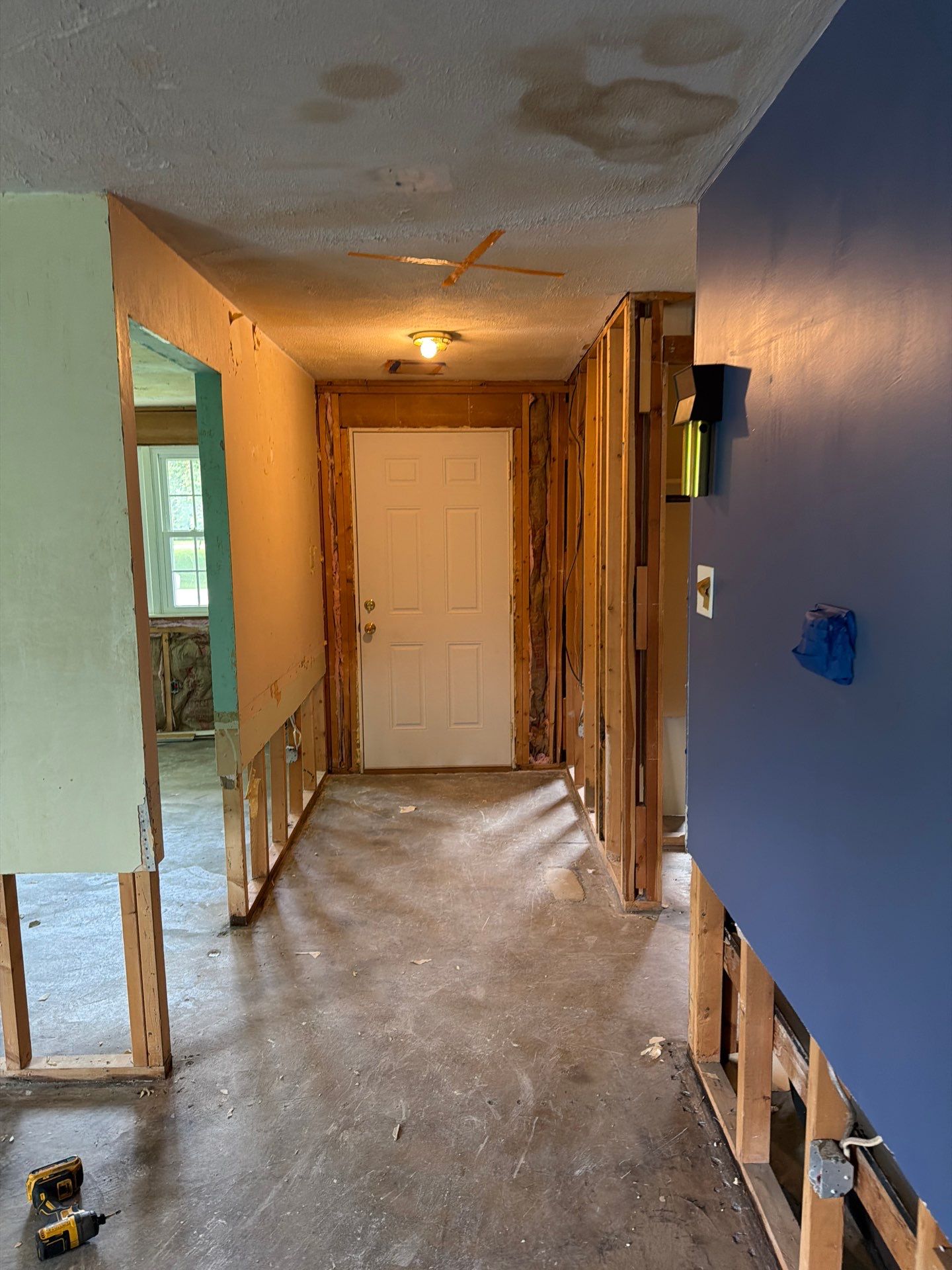
Once supply and power are off, document everything. Take wide photos of the room, close ups of the tank and the wet flooring, and video that pans across affected walls and baseboards. Insurance adjusters in Liberty routinely ask for pre-cleanup documentation, and homeowners who skip this step often see their claims reduced. If the leak is slow and contained to a tile or concrete floor, towels and a wet vacuum may handle the visible water. If it has reached carpet, drywall, hardwood, or a finished basement, stop trying to dry it yourself. Hot water wicks into porous materials faster than cold, and what looks like a damp corner is usually a much larger saturation zone behind the surface.
One detail homeowners often miss in the panic of the first hour is opening a hot water tap somewhere in the house after shutting the cold inlet. This breaks the vacuum inside the tank and slows the discharge dramatically, especially if the leak is at the bottom seam where pressure is highest. If you can safely reach the drain valve at the base of the tank, attaching a garden hose and routing it to a floor drain, sump pit, or exterior door is far better than letting the remaining 40 plus gallons spread across finished space. These small mechanical moves in the first ten minutes can be the difference between a single room loss and a multi-room claim.
Why Water Heater Leaks Get Expensive Fast
The reason a water heater failure can outpace, say, a dishwasher overflow comes down to volume and temperature. A standard tank holds 40 to 80 gallons, and when the tank itself ruptures, all of that water leaves in minutes. Even a slow seep from the T and P valve can release several gallons an hour for days before anyone notices. That water travels along the path of least resistance, which in most Liberty homes means down through subfloor seams, into wall cavities, and across the top plate of the floor below. We have pulled up hardwood three rooms away from the original leak more times than we can count.
Hot water also accelerates microbial growth. Mold spores that would take 48 to 72 hours to establish in cool water conditions can begin colonizing warm, damp drywall in as little as 24 hours. This is why the IICRC S500 standard treats sustained warm water intrusion as a high priority dry out. If you want a deeper look at the full process, our breakdown of water damage restoration cost walks through how Category 1 clean water losses are priced, scoped, and dried.
Location inside the home matters as much as volume. A water heater installed in a second floor utility closet, which has become common in newer Liberty construction, turns a leak into a vertical disaster. Water finds light fixtures, HVAC chases, and stairwells, often ruining ceilings on the level below before anyone hears a drip. Garage and basement installations are more forgiving, but only if the floor drain is clear and the pan beneath the unit is intact. We frequently find drip pans that have rusted through or were never plumbed to a drain in the first place, which means the safety device homeowners assumed would save them never had a chance.
Real Cleanup Costs in Liberty
Homeowners always want a number, and we respect that. For a contained water heater leak caught within a few hours, professional water extraction, drying, and moisture monitoring typically runs between 1,200 and 3,500 dollars in the Liberty market. That assumes Category 1 water (clean, potable), a single room of affected flooring, and no structural drywall removal. If the leak sat overnight or longer, or if it migrated into a finished basement, expect 4,000 to 9,000 dollars once you factor in carpet pad replacement, drywall flood cuts, antimicrobial treatment, and three to five days of air movers and dehumidifiers. Full finished basement losses with cabinetry, trim, and flooring replacement can exceed 15,000 dollars, which is when our basement flooding crews get involved with structural drying plans.
Replacing the water heater itself is a separate line item, generally 1,500 to 2,800 dollars installed for a standard tank unit, more for tankless conversions. We do not sell water heaters. We coordinate with your plumber so the restoration timeline does not stall waiting on the appliance swap. Most homeowners insurance policies in Indiana cover sudden and accidental discharge from a water heater, though they typically exclude the cost of the heater itself. Document the failure mode (tank rupture vs. slow seep), keep all receipts, and request a copy of our moisture mapping report for the adjuster.
Deductibles, depreciation, and policy language around gradual damage are where claims get complicated. If an adjuster determines the tank had been weeping for weeks or months, coverage can be denied under the gradual damage exclusion, even when the final failure was sudden. This is another reason early documentation matters. A clear photo of a clean, dry floor from two weeks ago, captured during routine basement use, can support a sudden discharge argument far better than a homeowner's memory. Liberty Water Restoration project managers regularly sit on calls with adjusters to walk through scope, and that advocacy is built into how we work claims in Liberty.
What Professional Restoration Actually Looks Like
When our team arrives at a Liberty home, the first thing we do is meter every affected and adjacent surface with penetrating and non-penetrating moisture meters. We are not guessing. We map the saturation footprint, mark it on a floor plan, and show you the readings before any equipment goes down. From there, extraction is the priority. Standing water and saturated padding come out first, often within the first two hours on site. You can read more about how we approach water extraction services if you want to understand the equipment side.
After extraction, we set a drying chamber. That means commercial air movers calibrated to the square footage, dehumidifiers sized to the grain depression we need to hit, and sometimes targeted heat or injection drying for hardwood and wall cavities. We monitor daily, adjust equipment, and pull it only when the materials have returned to dry standard. Skipping monitoring is how homeowners end up with mold calls six weeks later, and it is the single biggest difference between a cheap quote and a complete one.